
Παρουσίαση/Προβολή
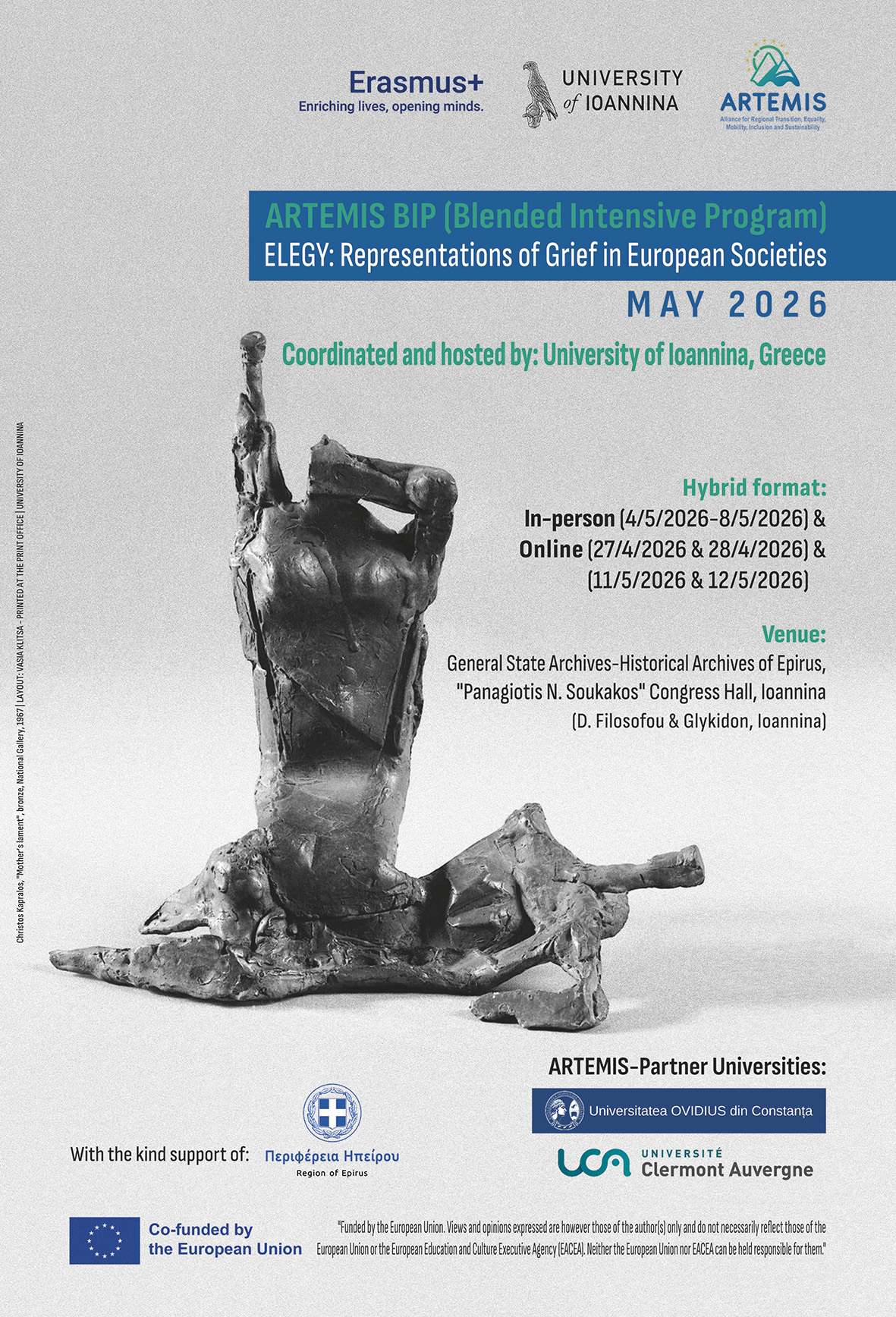
ELEGY: Representations of Grief in European Societies
(2024-1-EL01-KA131-HE) - Despoina Papastathi
Περιγραφή Μαθήματος
Private stories, but also collective experiences related to death, loss and the feeling of grief find expression through art. From funerary monuments, tombstones, musical genres associated with death, such as requiems, elegiac poetry to the dedication plaques on the benches of today's London or the incised bronze cubes placed on pavements in front of the entrance of houses in Cologne, where Jews lived before the Second World War -victims of Nazi atrocities- to the names of the first thousand dead of Covid 19 on the front page of the New York Times, the path of dealing with the grief caused by death and the memory of trose lost - since man is only forgotten when his name is forgotten - is through art and its various manifestations.
Mourning and the grief for the loss of a person are expressed by the poetic genre -known since Greek antiquity- as elegy. Karen Smythe defines elegy as a verbal representation or staging of emotion, wherein the detached speaker engages the audience with the intent of achieving some form of cathartic consolation. It is one of our oldest of poetic genres revealing an ancient relationship between literature and loss. Poetry of mourning as private utterance offers refuge from the social denial of grief, and as published discourse it carries out in the public its struggle against the denial of grief.
The aim of the Artemis BIP entlitled "Elegy: Representations of Grief in European Societies" is the interdisciplinary approach and exploration, through various cultural and artistic expressions, of the experience of death, individual and collective, in European Societies.
Ημερομηνία δημιουργίας
Τρίτη 13 Ιανουαρίου 2026
-
Δεν υπάρχει περίγραμμα